
Posts Tagged ‘work experience’

Is it really worth doing a master’s?

October 18th, 2011

When considering continuing your education beyond bachelor’s degree level, it is very important to stop, take a moment and…think.

Daunting as it may sound, it is essential to plan your future a few years down the line.  You wouldn’t impulsively buy something for thousands of pounds, so why dive head first into a master’s course?  Take the time to map out what doors your master’s will open.  If you have your heart set on a career in academia then clearly a master’s is the logical step but unless you have spent time considering how your master’s will further your career, is it really worth it?  There are plenty of graduates who view a master’s as a way to put off looking for a job while trying to improve their chances of getting a job. It is not wise to fall into this trap.

After all, undertaking a master’s is a very expensive affair. Professor Vincent Emery, vice-head of the graduate school at University College London, advises that prospective postgraduate students “need to be more focused on the advantages for them in terms of career and employment of going on to do a master’s.” A career-orientated master’s degree might be the way forward; but consider contacting people working in the relevant industry to garner their opinions before committing to one. If they suggest a further qualification will not add much to your employability then it might be time to reconsider staying in education.

Moreover, in the majority of industries Inspiring Interns works with (such as marketing, business development, advertising and digital media) our experience is that a master’s degree will not necessarily make your application stand out.  Of the graduates that began graduate internships through Inspiring Interns in the last three months, only 19.9% completed a master’s.  We have found that many employers tend to value work experience that you have garnered throughout and after university, and they are willing to take on an eager graduate ready to enter the world of work. That is not to say that a master’s will damage your application, just that it does not guarantee a place at the head of the queue of candidates.

So if you have considered all of the above, and can’t decide whether to take a master’s or not; what is the solution? We read in the business section of the Times on Sunday (16th October) of executives completing part-time MBAs in the hope of a promotion, pay rise or career move.  And although only 12% of mature students are funded by their employer, many are in a financial position that enables them to be able to afford this further education.  Studying for a master’s or business qualification may be more useful to you in later life than currently.

Clearly not everyone will find themselves in a position to be able to afford higher education in later life but our advice is do not do a master’s if it is your last resort. Consider all your options, including doing a graduate internship, before you commit to paying so much for what could be a redundant line on your CV.

Off into the world – guest blog

September 28th, 2011

Guest post written by MA Literary Studies graduate, Laura Blake.

So I’ve just completed my MA dissertation. A long, hard year spent buried in the library and forgoing Saturday nights have (hopefully) paid off, and in less than a weeks’ time I’ll be leaving university for good and taking my first steps out into the big wide world, armed with nothing more than my degree and my CV. Oh help.

Of course, I’ve also got the knowledge that I’d do a really, really good job in my chosen field. The trouble now is convincing other people of that fact! I’d love to work in magazine publication or book publishing, so my task is to figure out how I am going to stand out, get my foot in the door and get my hands on a job. But where to start?

Experience is one of the most important tools you can have. As I’ve known that this is what I’ve wanted to do for awhile now, I tried to be crafty and joined my university’s student magazine way back in my first freshers’ week. Unfortunately I got slightly distracted (for the entire year) and didn’t attend a single meeting, let alone write anything. In second year though, I really made it a commitment to it, and eventually ran for, and won the position of Features Editor. So at least I knew, albeit on a small scale, what I was getting myself in for (picture many late nights in the editing room trying to get to grips with Quark software;it wasn’t pretty) and could decide if it was something I was committed to as a career. It was.

Since then, I’ve been trying to grab any kind of experience possible to boost my CV, because after all, every little helps. I blog, I’ve joined LinkedIn; why, I even joined Twitter, because if it’s going to help me network, then I’d be stupid not to. You’ve got to put yourself out there as much as possible; head hunters won’t find you if you’re invisible.

Everybody says there aren’t enough jobs to go around, and I know that job hunting can be stressful, but luckily there is a God out there and someone decided to put together a site such as this one.I discovered Inspiring Interns a few weeks ago and I already feel better knowing that these guys are rooting for me and offering as much help as they can. They understand that many companies nowadays want candidates who have a good bank of work experience under their belts and you can never have too much experience. And what’s better than having an internship on your CV? A graduate internship is perfect opportunity to show case your talents, learn new skills, and hopefully, impress the right people, as well as giving you a realistic taste of the working world. I’ve already got a list of their vacancies that I’m going to apply for, all that’s left do now is wait and see… it’s a tricky business, but I’m sure that if I’m persistent, it’ll pay off.

Have a look at Laura’s blog here http://laurathegraduate.blogspot.com/

If you are interested in writing for Inspiring Interns then please email us at marketing@inspiringinterns.com

How to write a stand out CV with little to no experience – guest blog

August 23rd, 2011

Guest Post written by Sachin Shah, Director of International at www.SimplyHired.co.uk

Recent graduates are often faced with this problem: you need experience to get a job, but you need a job to get experience. Getting your CV to stand out from the hundreds of other graduates is challenging with little to no work experience under your belt. To compete, you’ll need to show a future employer what you have that the others don’t.

You may have more experience than you think. Making a list of everything you have done and what you learnt from each activity is an excellent way to remind yourself about the amount of transferable skills you have. Your CV needs to be professional as a graduate, but coursework, volunteer opportunities, summer jobs and even involvement in extra-curricular activities can show what skills you already hold; even singing in your university choir can give you some great transferable skills. Here are four ways to identify your transferable skills and build out your CV!

1. Coursework

If you took part in research as part of your degree at university and it‘s relevant to the job you’re looking for, include this on your CV. You may not have hands on experience, but your research will show that you have background knowledge that other applicants may not.

2. Summer Jobs

Summer jobs of any sort will have transferable skills. You may not think that your brief summer job at the local restaurant will help you when you start your job search.  However, when you work in a restaurant you will learn great customer service skills; working as waiting or bar staff is all about making the customer happy. Many roles involve you dealing with clients who will want the same treatment as someone eating at a restaurant – great service and meeting their demands!

3. Volunteering

It is very attractive to potential employers to see that you’re the type of person who is interested in contributing to the greater good. Volunteering will teach you skills such as team work and allow you to get a sense of work place environments. Having different volunteering initiatives on your CV also shows that you are proactive and aren’t treating graduation as a long-term holiday.

4. Extra-Curriculars

Extra-curricular activities are a confusing area when it comes to your CV. Graduates may not think it, but even being in a choir or a member of a sports team are great activities to include when job hunting for the first time. They show you have commitment; creativity and that you can work well with a team. These are great transferable skills and including these experiences on your CV will show a prospective employer that you have great background knowledge and specific skills, even if you’ve never spent time working in an office.

For more job search tips and advice, visit blog.SimplyHired.co.uk and begin your job search on www.SimplyHired.co.uk.

Weird and wonderful internships overseas – guest blog

August 19th, 2011

Written by guest blogger Caroline Apichella.

‘So I spent my summer internship lurking in the hall near the file cabinet. I read most of the things that were in the file cabinet, including some interesting memos that were marked ”top secret” and ”eyes only.” The file cabinet was right next to the men’s room, where one day the speaker of the House, Sam Rayburn, got locked in. Had I not been nearby, he might be there still.’

-          Nora Ephron “All the Presidents Girls”, New York Times (2003)

Right-on Nora, interns might not be working at desks or calling the shots like we all secretly hope we will, but how many 20-something women in 1961 were in the White house?

As an intern- hunter in search of work experience next Christmas— my last Christmas as an undergraduate— I’m on a mission to find an equally wow internship like Ephron’s, but what am I looking for? And what is on offer to people like me?

I’ve been doing my research, and there are 3 internships which thoroughly excite the potential traveller, eccentric and philanthropist in me.

Roman Holiday

Law-firms and media offices like the BBC receive high levels of applicants, but let’s look at some bigger offices offering work-experience. Take the Vatican for instance. Any serious intern- hunters will already know about this one.

It surely is an exceptional opportunity for lovers of Roman architecture, religion and beauty. I for one adore the Baroque wonder that is the Basilica of St. John Lateran. Imagine working in the Vatican archives or the Vatican publishing house?

However off putting writers and film makers have presented the Vatican, the place is a modern centre for young academics and scholars. The Vatican Studies Center established a series of internship opportunities, bringing a youthful and forward-looking aspect to the vast establishment.

For example, interns launched the Vatican’s YouTube channel and created a virtual tour of the Basilica of St. John Lateran, which can be viewed online today. http://www.youtube.com/user/vatican

But if Rome isn’t for you there are other options.

Night at The Museum

This month in HuffPost College, the paper highlighted unusual and ‘weird’ internships which are offered, with genuine prerequisites including ‘being weird’ and ‘having a taste for fun’.

Last year General Manager Michael Hirsch of Ripley’s Believe it or Not museum opened a new internship programme. He explained that the placement was open to those who enjoy the extraordinary and the strange: ‘If the idea of earning college credit in the world’s best tourism market while being surrounded by shrunken heads, a lock of Elvis’s hair, and 500 other amazing artefacts, look no further.

The placement is in the Center of New York in Times Square, and despite the gaga rudiments they require, this sounds like an exciting and challenging venture.

Of course, these placements are impressive, but I was truly inspired by another internship which I discovered recently. This one is for the adventurer.

Love in Nepal

Rome and New York are two internship hubs, but in the mountains of Nepal there is perhaps the most extraordinary internship for a dedicated and strong- willed intern.

In the Himalayan setting of Nepal, The Asend: Mountainchild presents a 30 day placement emphasizing sustainable development work. It aims to empower a new generation of local Tibetans with the skills necessary to bring lasting transformation to their people and villages.

In short, “it exists for the sole purpose of raising awareness, resources and financial aid for humanitarian work carried out amongst children living in the Himalayas.”

It is a physically demanding, high- altitude trek in extremely basic conditions.

So if like Nora Ephron, you seek an internship with a fizz, these are just three options among a world of opportunities. Soon I will be interviewing three interns from London, New York and Hong Kong, asking them about their experiences.  Meantime, take a look at http://www.inspiringinterns.com/ for even more ideas for out-of-the ordinary graduate internships.

If you are interested in writing a guest blog post for Inspiring Interns then email us at marketing@inspiringinterns.com

A graduate guide to LinkedIn

July 26th, 2011

LinkedIn serves as your online CV and allows you to connect withfriends, colleagues and companies in professional capacity.  Its value is immeasurable yet at Inspiring we’ve noticed that the majority of graduates that we meet aren’t using LinkedIn.

First things first, set up a profile and take the time to complete it 100%. If, like all unemployed graduates should, you have an up to date CV you can import it into your profile to save time.  Write a killer headline (avoid being generic), choose a relatively professional looking photo, sell yourself in your profile, emphasising what you can do, as opposed to what you cannot.  You can also personalise your URL, which will help when potential employers search for you on Google.

Once you have built your profile, connect with people.  If you are having difficulty finding contacts, import your email contacts and start there.  Investigate 2nd and 3rd level connections; will they be able to help you begin your career?  You can ask previous employers for recommendations which function as public endorsements of previous work and adds weight to your profile.  Search for people related to the type of work you are interested in, especially those that would be interested in your work experience and qualifications.  You can also follow companies that you would be interested in working for. Companies that update their pages regularly may provide information that would prove invaluable in an interview situation or even helping you get a foot in the door.

Take advantage of the status update function and let others know what you are looking to do.  People often use LinkedIn to post questions, which offers you the opportunity to share your knowledge and make further connections. So get involved, answer these questions if you can and ask your own.  In a market place becoming increasingly saturated with graduates, those who make the effort to get noticed inevitably will be.

9 ways to beat those ‘graduate blues’

July 20th, 2011

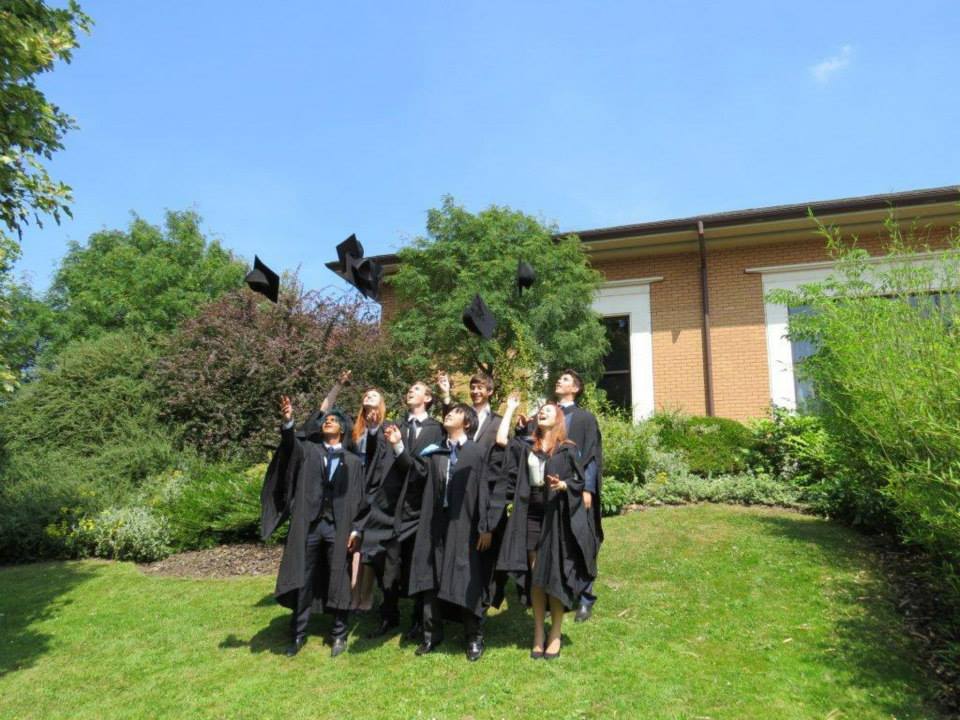
It’s that time of year again, when thousands of graduates are donning their mortarboards and gowns to collect their certificates. This has been the day all students have been working toward for the past 3 or 4 years. So why aren’t they all happy?

That sense of loss some feel between leaving university and finding out what you want to do next is normal. It may be because they feel nervous and anxious about the road ahead, especially in an uncertain graduate job market. It could also be because they have put so much effort into their studies they just feel exhausted. Whatever the reason, here is some advice to beat those post-university blues.

1.      Set new goals and a new plan to attain them. After 3 or 4 years of being challenged at university there is nothing like a new challenge to excite and motivate you out of the graduation blues. Break your goals into smaller, more manageable tasks so instead of just saying “get a career” break this down into “updating your CV,”“finding two referees” and “signing up to a recruitment agency.” Then put these goals in chronological order and focus on one at a time until you have achieved it.

2.      It will be weird leaving university and having no structure to your days so make sure you start a routine and set your own schedule. This will help you stay motivated and productive. You don’t want to wake up every day with no point to it; this will only bring you down.

3.      Don’t stop learning! Learning doesn’t stop once you graduate, this may include learning a language or developing your IT skills in MS Excel or Photoshop. Something that is relevant to what you want to do and will make you stand out against the other 150,000 students leaving university this year.

4.      Keep busy and use your time effectively! Update your online profile, start a blog about your area of interest which will enhance your writing skills and demonstrate a passion for your chosen career and keep your CV up-to-date.

5.      Stay active! Join the gym or a club, volunteer, travel etc. Healthy is happy!

6.      If you don’t know what you want to do then why not try out a career with a graduate internship? An internship is a great way to test the waters without having to commit to a role.

7.      Another way of keeping busy, enhancing your CV and getting some pocket money is  through temporary work. You never know where this may lead.  Employers don’t often let valued, trained workers go.

8.      You will almost certainly conclude that the most treasured aspect of your university experience was the friends you made. Make it a priority to stay in touch with those who mattered most to you during your university career.

9.      Your graduation is a once-in-a-lifetime moment so make sure you enjoy every second!

If this is something you are going through then don’t freak out too much! Stay positive and things will fall into place.

Graduates are working in low-skill jobs

May 12th, 2011

University leavers are increasingly taking menial jobs that do not require a degree, it was reported today.

New statistics published by the Association of Accounting Technicians reveals that 40% of last year’s graduates are ‘underemployed’ in lower-skilled jobs six months after leaving university. This figure has risen from 30% in 2007.

Graduates have been among the worst hit by the economic downturn with research forecasting a deteriorating jobs market for graduates who will leave university this summer. The study predicts that the figures will rise to 42% of this year’s graduates working in low-skill jobs where a degree is not required, six months after graduating.

With the tuition fees set to soar, this raises the question of whether a university degree is worth the financial investment. Jane Scott Paul, chief executive at the Association of Accounting Technicians who commissioned the study says; “If we are asking people to invest £9,000-a-year on tuition fees, they should expect a credible return on that investment. Yet over half the graduates are nowhere near benefitting from their degree and the situation is set to get worse.” Therefore those considering the option of university need to think more carefully about job prospects and employability skills post-university.

The study shows graduates of law, history and philosophy are the most likely to be “underemployed”. However, graduates in medicine, dentistry and veterinary science are more likely to be in graduate employment.

With high competition for graduate jobs the alternative choice for university leavers is to find a graduate internship. Rather than taking a menial, low-skilled job that the candidate is over qualified for, an internship can bridge the gap between university and a graduate job. A good graduate internship can provide valuable work experience, key skills and the potential to build up a network of contacts.

Do you take whatever you can to start earning money, whether this is a supermarket job or call centre with no career prospects? Or do you gain experience and contacts through a graduate internship, progressing to a full-time permanent role?

Roof top grads and hot dogs

May 5th, 2011

We conducted a rooftop group discussion with ten graduates and asked them to about their graduate experience whilst supplying them with vast amounts of burgers and sausages.

We wanted to find out about their university experience, their views on careers advise services, rising tuition fees and graduate job hunting.

Here’s what we found out…

Firstly we asked them about their careers advice services, whether they attended and what they got out of it.

Only half of the group had been to see their careers advice service. One of the reasons for not going to get advice was that the service was not widely advertised. Others were given the impression that the careers service did not encourage students to attend. One said that out of his three years at university the careers service only made themselves known once.

One group member admitted that he didn’t go to his career advice service because he didn’t think he would need the service stating that, “I was just over confident that I would be able to get a job at the end of it.”

Another said they attended Personal Academic Development which was a workshop for CV advice and job hunting after university.  The university got money for the students that took part however she said, “It wasn’t useful and gave us no hands on experience.”

We then asked the group about their views on graduate starting salaries salary and their expectations.

One answered; “I would be thinking 20k but settle for 18k if I had to.”

We then told them the average graduate salary which is between £25-26k (these figures are slightly distorted by sectors like banking and law which have a much higher starting salary, as opposed to media for example, one of the sectors we place most candidates in). Some of the group were shocked and yelled back at us;

“I have been lead to believe I would be lucky to earn 20k” whilst one said that he had seen a job in television in London starting on £14k.

We recently attended Graduate Answer Time, a ‘question time’ style panel event organised by totaljobs.com, where members of the NUS, university board members, the AGR, members of The Russell Group and graduate recruiters discussed and debated to what extent the rise in tuition fees will alter university Experiences.

This raised an interesting question about how the rising fees will affect the choice of course and job prospects after university. To find out how students felt about paying £9,000 a year we posed the question on Facebook. The majority (46.4%) voted that they would possibly think twice about studying a purely academic subject. A further 14.2% said they would definitely think about a vocational subject that would enhance their employability. However, 17.8% voted that it would probably not affect their decision but that it would make them think about their job prospects post university. The jokers amongst you (17.8%) opted for the subtle, ‘Definitely not! What mug wrote this question anyway?’ option.

With this in mind we asked the roof-top group.  One cried, “I wouldn’t go to university now, not at £9,000 a year!”Some of the group said it would make them think more about the course they choose, possibly choosing a more vocational course or business related degree and how it would affect their employability after university. One said; “I would definitely do something with more guaranteed prospects.”

Another said she is pleased her academic degree in English but rising fees would make her think twice.  She said, “I am glad I did it, but if I was to do it now I would be more reluctant to go because of the higher fee.”

Others would think about adding further value through gaining work experience or travelling abroad to study or take on an internship. One said, “I think the experience is worth so much more than a degree now. I wish I had done more in my summers related to what I actually wanted to do because no-one really cares about the degree any more, they want the experience.”

Another said, “It is much more important to get the experience and maybe languages and going abroad than university because it is hard to get a job or graduate internship.”

When asked whether they worried about employability when you were at university, one answered, “I was quite naive and thought it would be much easier than this.”

The most interesting comment of the day was as follows: “When it was £3,000 I didn’t really think about it I just always knew I was going to go. But £9,000 that’s just ridiculous, I just couldn’t do it!” This begs the question, will students starting university in 2012 accept the fee hike as we did in 2006?

Social mobility strategy

April 5th, 2011

Deputy Prime Minister Nick Clegg announced the launch of the Government’s social mobility strategy today.

Stating that no-one should get an unfair advantage purely because of “who they know”, the Liberal Democrat leader criticised Labour’s record in improving social mobility as he outlined how the Coalition intends to make Britain more meritocratic.

Clegg says that “fairness is one of the fundamental values of the Coalition Government”, with this new strategy aiming to create fair access to jobs and ensure that everyone has the opportunity to fulfil their potential. As a result, the Deputy Prime Minister says the scheme will make career progression less dependent on “who your father’s friends are”.

In advance of the strategy’s launch, Clegg says “We want a society in which success is based on what you know, not who you know or which family you are born into. So our social mobility drive is aimed at helping the majority of people to move up the rungs of the ladder of opportunity.”

A major part of the policy focuses on making work experience and internships a driving force in widening access to professions. The Coalition believes practical experience can provide young people with valuable opportunities and skills, as well as increasing their understanding of an industry. Most importantly, obtaining an internship can really boost employment chances.

They recognise, however, that internships can often be the preserve of those with existing connection within an industry. This is particularly true of popular sectors such as journalism, law and banking. The strategy aims to open up internships to everyone, not just the “well-connected”.

Employers and businesses will be encouraged to make their employment methods more transparent and offer internships on merit rather than through informal channels. They will also be expected to provide some kind of financial support to interns, with reasonable out of pocket expense to be reimbursed as a minimum. Both these measures match Inspiring Interns’ own commitment to fair internships. We advertise all our vacancies widely, so that it is not just those ‘in the know’ who can apply for our schemes, and our remuneration policy is one of lunch and travel expenses as a minimum.

We welcome the Government’s social mobility strategy and their support for fair and open internships. With ever increasing numbers of graduates entering a hugely competitive job market it has become crucial for university leavers to have meaningful work experience. Securing this experience should be about what you know, not who you know.

Graduate Talent Pool

February 8th, 2011

The Graduate Talent Pool was launched in July 2009 by the Government to improve the long-term employability of recent UK graduates.

During the current economic downturn current graduates are facing one of history’s toughest job markets.  The Government scheme aims to help graduates gain skills and open doors to companies.

The Graduate Talent Pool offers graduates free access to internship vacancies across a range of industry sectors.  It has a good geographical spread of opportunities across the UK from UK employers. Graduates can search and apply for internship vacancies provided they graduated in 2008, 2009 or 2010 from a UK university with a degree or foundation degree.

Getting an internship through the site is one way of building valuable employability skills, gain real-life work experience and vital transferable skills. It allows graduates to try their hand at a profession or career path as well as prove themselves to a potential employer.

Universities Minister David Willets commented, “Over 28,000 internships vacancies have been advertised by employers on the Graduate Talent Pool website since its launch in July 2009. The Graduate Talent Pool is a free website which brings together employers and graduates. There are currently nearly 1,855 internships available.” The popularity of the site ensures there are always a large number of opportunities available, but conversely means there is usually a lot of competition for ever position.

Inspiring Interns regularly post job adverts on Graduate Talent Pool and feel it is a great portal for opportunities. We currently offer a more intimate application process where we actively match candidates and companies.  Working with a range of small and medium sized businesses, we feature a diverse range of roles in various sectors including marketing, fashion, mobile and digital.

Inspiring Interns Vacancies